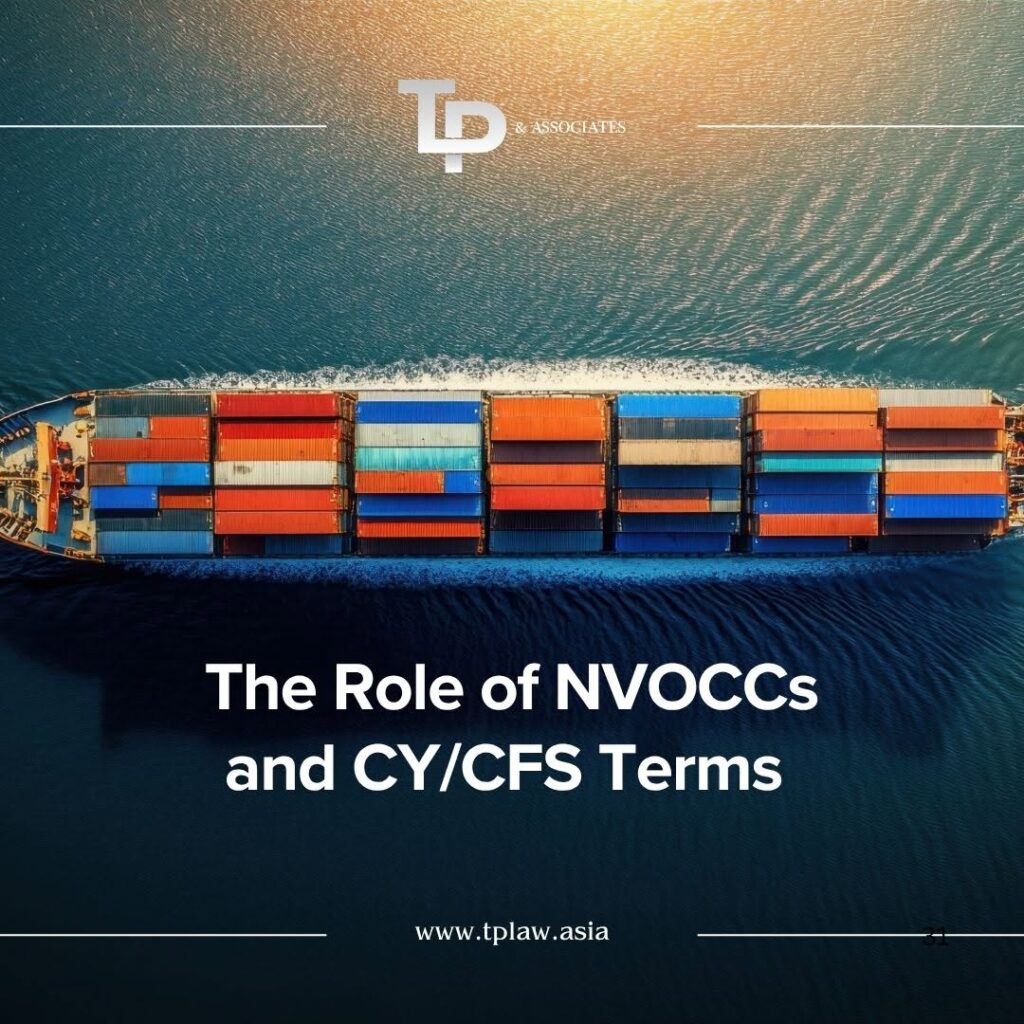
Ocean freight is the backbone of Thailand’s logistics due to its cost-efficiency and massive capacity. A key player in this ecosystem is the NVOCC (Non-Vessel Operating Common Carrier), also known as OTIs in the US.
Although NVOCCs do not own vessels, they operate and issue Bills of Lading just like traditional shipping lines. They offer four primary container handling terms using the Container Yard (CY) and Container Freight Station (CFS):
1. CY/CY: The shipper stuffs the container (FCL) at their facility and delivers it to the origin CY. The NVOCC’s responsibility extends to the destination CY.
2. CFS/CFS: The NVOCC receives loose cargo (LCL) at the origin CFS, consolidates it, and assumes responsibility up to the destination CFS, where goods are deconsolidated for the consignee.
3. CFS/CY: The NVOCC receives goods at the origin CFS, stuffs them into a container, and transfers it to the origin CY. Responsibility ends at the destination CY.
4. CY/CFS: The shipper stuffs the container and delivers it to the origin CY. The NVOCC transports it to the destination CFS for deconsolidation.
Furthermore, optimizing costs based on Incoterms requires strategic vessel network management:
– Mother Vessel: Large-capacity ships operating on long-haul routes between major hub ports.
– Feeder Vessel: Smaller ships that transport containers from regional ports to feed the Mother Vessel.
Understanding these NVOCC operations and vessel networks is crucial for optimizing supply chain costs and efficiency.